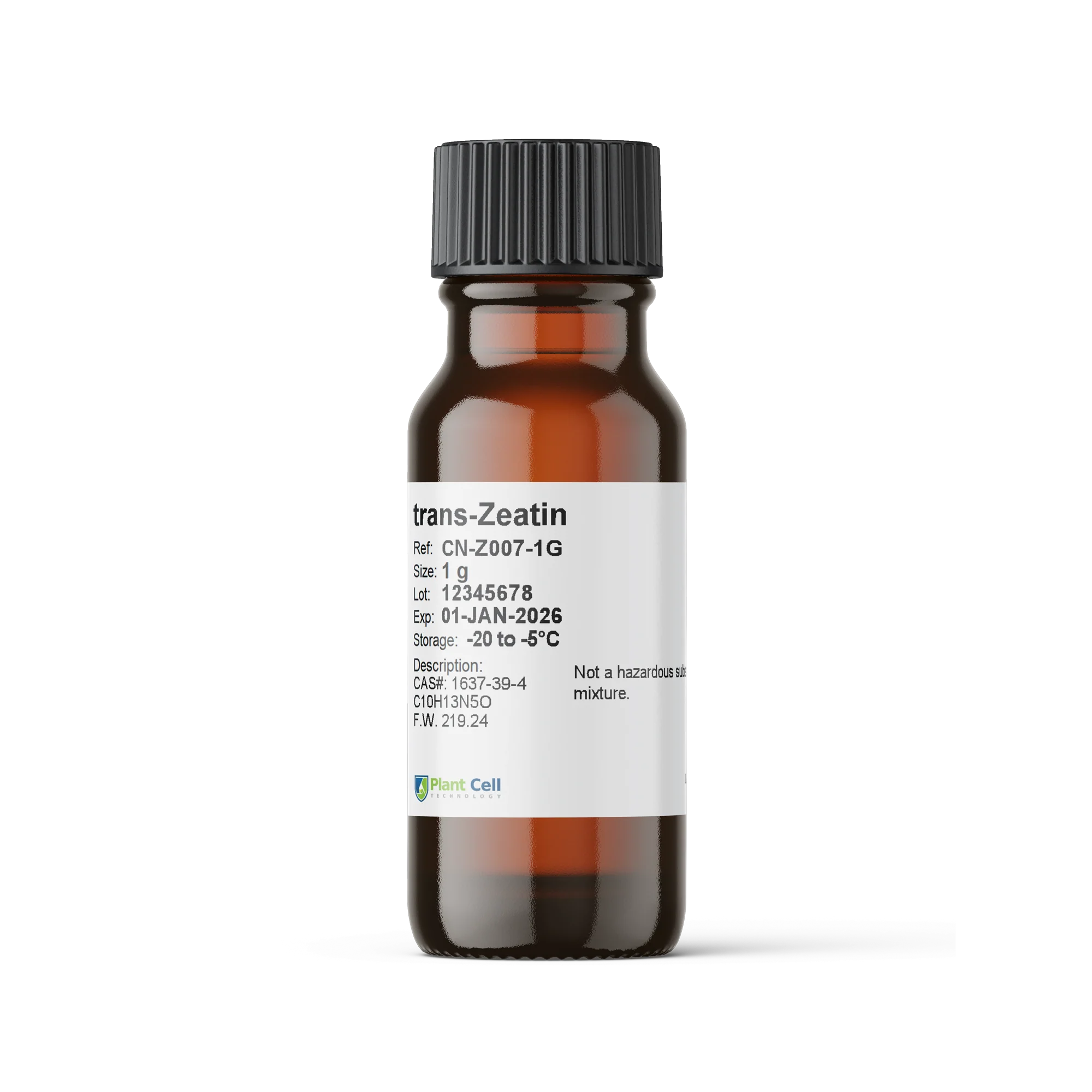
Trans Zeatin
Trans-Zeatin is a naturally occurring cytokinin that plays a critical role in cell division, shoot initiation, and overall plant vitality. Ideal for plant tissue culture, agricultural R&D, and biotech applications, trans-Zeatin is a trusted choice for researchers and agronomists alike.
Product Highlights:
-
High Purity: ≥98% (HPLC) – consistent results in all applications
-
CAS Number: 1637-39-4
-
Molecular Formula: C10H13N5O
-
Synonyms: t-Zeatin, trans-Zeatin riboside (precursor form)
-
Form: White to off-white crystalline powder
-
Solubility: Soluble in DMSO, ethanol, and basic aqueous solutions
Key Benefits:
-
Promotes cell division, shoot regeneration, and chlorophyll synthesis
-
Essential for micropropagation, seed germination studies, and stress resistance experiment
Disclaimer: Results may vary depending on specific cell lines, specifications, and experimental conditions. Consult with cell culture specialists and review comprehensive literature to tailor its use to your specific research needs.
Original: $151.99
-70%$151.99
$45.60Product Information
Product Information
Shipping & Returns
Shipping & Returns
Description
Trans-Zeatin is a naturally occurring cytokinin that plays a critical role in cell division, shoot initiation, and overall plant vitality. Ideal for plant tissue culture, agricultural R&D, and biotech applications, trans-Zeatin is a trusted choice for researchers and agronomists alike.
Product Highlights:
-
High Purity: ≥98% (HPLC) – consistent results in all applications
-
CAS Number: 1637-39-4
-
Molecular Formula: C10H13N5O
-
Synonyms: t-Zeatin, trans-Zeatin riboside (precursor form)
-
Form: White to off-white crystalline powder
-
Solubility: Soluble in DMSO, ethanol, and basic aqueous solutions
Key Benefits:
-
Promotes cell division, shoot regeneration, and chlorophyll synthesis
-
Essential for micropropagation, seed germination studies, and stress resistance experiment
Disclaimer: Results may vary depending on specific cell lines, specifications, and experimental conditions. Consult with cell culture specialists and review comprehensive literature to tailor its use to your specific research needs.